
8 Health Benefits from Omega 3
April 29, 20198 Health Benefits from Omega 3
Omega-3 fats are commonly recommended for heart health.
In one study in 154 obese adults, daily doses of 2,700 mg of DHA for 10 weeks increased the omega-3 index — a blood marker of omega-3 levels that’s linked to a reduced risk of sudden heart-related death — by 5.6%
The same daily dose of EPA increased the omega-3 index of the same participants by only 3.3%.
DHA also decreased blood triglycerides more than EPA — 13.3% versus 11.9% — and increased “good” HDL cholesterol by 7.6% compared to a slight decrease for EPA
Notably, DHA tends to increase “bad” LDL cholesterol levels but mainly the number of large, fluffy LDL particles, which — unlike small, dense LDL particles — aren’t linked to increased heart disease risk.
Attention deficit hyperactivity disorder (ADHD) — characterized by impulsive behaviors and difficulty concentrating — generally starts in childhood but often continues into adulthood
As the main omega-3 fat in your brain, DHA helps increase blood flow during mental tasks. Research has shown that children and adults with ADHD commonly have lower blood levels of DHA
In a recent review, seven of nine studies that tested the effects of DHA supplements in children with ADHD showed some improvement — such as with regard to attention or behaviour.
For example, in a large 16-week study in 362 children, those taking 600 mg of DHA daily had an 8% decrease in impulsive behaviours as rated by their parents — which was twice the decrease observed in the placebo group
In another 16-week study in 40 boys with ADHD, 650 mg each of DHA and EPA daily alongside the children’s usual ADHD medication resulted in a 15% decrease in attention problems, compared to a 15% increase in the placebo group.
3. Fights Inflammation
Omega-3 fats such as DHA have anti-inflammatory effects.
Increasing your DHA intake can help balance the excess of inflammatory omega-6 fats that is typical of Western diets rich in soybean and corn oil.
DHA’s anti-inflammatory properties may reduce your risk of chronic diseases that are common with age, such as heart and gum disease, and improve autoimmune conditions like rheumatoid arthritis, which causes joint pain.
For example, in a 10-week study in 38 people with rheumatoid arthritis, 2,100 mg of DHA daily decreased the number of swollen joints by 28%, compared to a placebo.
Though previous studies had shown supplements combining DHA and EPA helped improve rheumatoid arthritis symptoms, this study was the first to indicate that DHA alone could reduce inflammation and ease symptoms.
4. Supports Muscle Recovery After Exercise
Strenuous exercise can trigger muscle inflammation and soreness. DHA — alone or in combination with EPA — may help reduce muscle soreness and limitations in range of motion after exercise, partly due to its anti-inflammatory effects
In one study, 27 women taking 3,000 mg of DHA daily for a week had 23% less muscle soreness after doing bicep curls than the placebo group
Similarly, when 24 men supplemented with 260 mg of DHA and 600 mg of EPA daily for eight weeks, they had no decrease in their range of motion after an elbow-strengthening exercise, whereas men in the placebo group saw an 18% decrease.
5. Helps Some Eye Conditions
It’s uncertain whether DHA and other omega-3 fats help age-related macular degeneration (AMD) as once thought, but they may improve dry eyes and diabetic eye disease (retinopathy)
What’s more, two recent studies suggest that DHA may decrease contact lens discomfort and glaucoma risk.
In one 12-week study in contact lens wearers, 600 mg of DHA and 900 mg of EPA daily improved eye discomfort by 42% — which was similar to improvements noticed with corticosteroid eye drops.
Additionally, 500 mg of DHA and 1,000 mg of EPA daily for three months decreased eye pressure in healthy people by 8%. Elevated eye pressure is a risk factor for glaucoma, a disease that gradually erodes vision.
6. May Reduce Your Risk of Certain Cancers
Chronic inflammation is a risk factor for cancer. Higher intake of omega-3 fats such as DHA has been linked to a lower risk of several cancers, including colorectal, pancreatic, breast and prostate cancer
DHA may help reduce cancer risk through its anti-inflammatory effects. Cell studies also show that it may inhibit cancer cell growth.
Additionally, a small number of studies suggest that DHA may improve chemotherapy benefits. However, these tests are experimental, and scientists are working to understand how DHA may help.
Studies indicate that DHA may improve the effectiveness of anticancer drugs and fight cancer cells, but further research is needed.
7. May Help Prevent or Slow Alzheimer’s Disease
DHA is the main omega-3 fat in your brain and essential for a functional nervous system, which includes your brain.
Studies have shown that people with Alzheimer’s disease have lower levels of DHA in their brains than older adults with good brain function
Additionally, in a review of 20 observational studies, higher intake of omega-3 fats was linked to a reduced risk of declining mental ability — a characteristic of different types of dementia, including Alzheimer’s disease — in all but three studies.
However, in 13 studies that tested the effects of omega-3 supplements in people with dementia, eight showed a benefit for mental ability while five didn’t.
The evidence suggests that DHA and other omega-3 supplements may be most beneficial before brain function significantly declines and interferes with daily activities.
8. Lowers Blood Pressure and Supports Circulation
DHA supports good blood flow, or circulation, and may improve endothelial function — the ability of your blood vessels to dilate
A review of 20 studies found that DHA and EPA may also help lower blood pressure, though each specific fat may affect different aspects.
DHA reduced diastolic blood pressure (the bottom number of a reading) an average of 3.1 mmHg, while EPA reduced systolic blood pressure (the top number of a reading) an average of 3.8 mmHg
Though elevated systolic blood pressure is a greater risk factor for heart disease than diastolic pressure for people over 50, elevated diastolic blood pressure also increases your risk of heart attack and stroke.
What Dose of DHA Do You Need?
Experts have not set a Reference Daily Intake (RDI) for DHA, but 200–500 mg of DHA plus EPA per day are generally advised for good health. This can come from fish, supplements or a combination of both.
There isn’t an upper limit on how much DHA you can take, but the FDA has advised limiting total DHA and EPA intake from all sources to 3,000 mg daily, with only 2,000 mg of this limit coming from supplements.
Still, doses used in some studies are higher, and the European Food Safety Authority claims that up to 5,000 mg daily of EPA plus DHA in supplements appear safe.
It’s best to discuss omega-3 supplement doses with your doctor for specific health concerns or if you plan to take high doses.
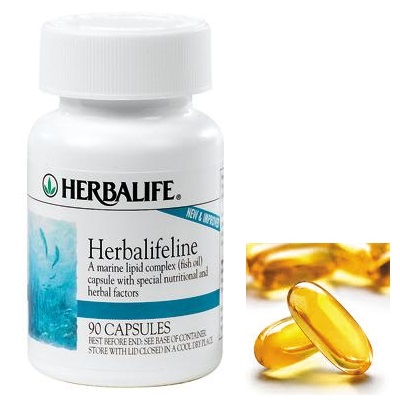
https://gyph.co.za/product/herbalifeline-omega-3/
CREDIT: This article was posted by https://www.healthline.com/